Have you ever opened up to someone about a stressful day, only to hear, “Don’t worry, it could be worse,” or “You’re overreacting”?
Instantly, a heavy situation feels even heavier. You might start questioning your own sanity, feeling isolated, or shutting down entirely. Now, imagine a different scenario where that person says, “Wow, that sounds incredibly overwhelming. I can see why you’re upset.” Suddenly, a wave of relief washes over you.
That shift in feeling is the power of emotional validation.
While it sounds like a simple concept, validation is one of the most fundamental human needs. It acts as a psychological lifeline, anchoring us when our internal worlds are in chaos. Let’s dive deep into what emotional validation actually is, why it is vital for your mental health, and how practicing it can radically transform your emotional well-being.
Understanding Emotional Validation: What It Is (and What It Isn’t)
At its core, emotional validation is the process of learning about, understanding, and expressing acceptance of another person’s emotional experience. It doesn’t mean you have to agree with their logic or their actions. It simply means you acknowledge that their feelings are real, understandable, and worthwhile.
To truly understand validation, we must look at what it is not:
-
It is not agreement: You can validate someone’s anger without agreeing with how they handled it.
-
It is not fixing: Validation requires listening, not instantly offering a 5-step solution to the problem.
-
It is not toxic positivity: Forcing someone to “look on the bright side” is actually a form of invalidation because it brushes their pain under the rug.
When we validate ourselves or others, we send a powerful message: “You are allowed to feel this way.”
The Core Psychological Benefits of Validation
Validation isn’t just a polite social nicety; it has measurable biological and psychological impacts on our brains and bodies.
1. De-escalates High Emotional Intensity
When you experience a strong emotion like grief, anger, or anxiety, your amygdala (the brain’s alarm system) goes into overdrive. If someone invalidates you, the alarm rings louder. However, when you receive validation, your nervous system receives a signal that it is safe. Your heart rate slows down, cortisol levels drop, and the emotional storm begins to pass.
2. Strengthens Self-Trust and Identity
Chronic invalidation—especially during childhood—leads to self-doubt. You begin to ignore your gut feelings because you’ve been told your feelings are wrong. Regular validation helps rebuild that broken self-trust. It reinforces the idea that your internal compass is functional, allowing you to navigate life with greater confidence.
3. Fosters Deep Human Connection
We are wired for connection, but true intimacy cannot exist without emotional safety. Validation is the ultimate builder of trust. Whether in a marriage, a friendship, or a workplace, showing that you understand someone’s perspective builds a bridge of empathy that strengthens bonds.
The Hidden Danger of Self-Invalidation
While getting validation from others is incredible, the most critical validation comes from within. Unfortunately, many of us are our own worst critics. We fall into the trap of self-invalidation.
How often do you tell yourself:
-
“I shouldn’t be crying over this.”
-
“I’m just being stupid and dramatic.”
-
“I need to just get over it.”
When you judge your feelings, you stack a second layer of negative emotion (guilt, shame, or anger) on top of the original wound. If you are sad, and then you punish yourself for being sad, you are now dealing with sadness and shame. Self-validation breaks this cycle. It allows you to accept the emotion, process it naturally, and let it go.
How to Practice Validation in Daily Life
Improving your emotional well-being through validation is a skill that can be practiced every single day. Here is how you can apply it to yourself and those you love.
For Yourself (Self-Validation)
-
Notice the emotion: Instead of numbing out or distracting yourself, pause and name what you are feeling (e.g., “I am feeling incredibly anxious right now”).
-
Remove the judgment: Avoid labels like “good” or “bad” emotions. All emotions are just data.
-
Normalize the feeling: Remind yourself why the feeling makes sense. (e.g., “It makes complete sense that I’m stressed because I have a massive deadline tomorrow”).
For Others
-
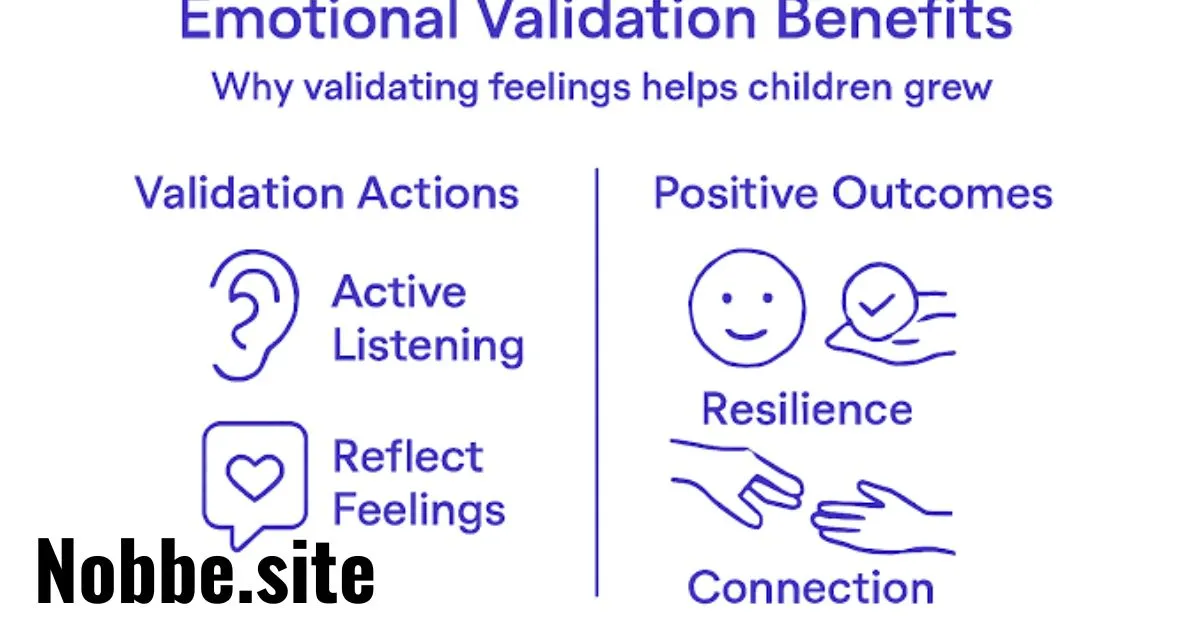
Practice Active Listening: Put away your phone, maintain eye contact, and listen to understand, not to reply.
-
Reflect back what you hear: Use phrases like, “It sounds like you felt really let down by that,” or “That sounds incredibly frustrating.”
-
Match their energy: If they are deeply sad, don’t meet them with high-energy optimism. Meet them with gentle, quiet presence.
Final Thoughts: The Pathway to Healing
Emotions are like waves—they rise, peak, and eventually crash onto the shore and recede. Invalidation acts like a seawall, blocking the wave and causing a violent, destructive splash. Validation, on the other hand, opens up the shoreline, allowing the wave to roll in, lose its power, and naturally dissolve.
By embracing validation, you stop fighting your emotions and start understanding them. It is the ultimate act of self-care and the foundation of robust emotional well-being. Start today by giving yourself permission to feel exactly as you do.