If you have ever felt a dull ache in your lower back after sitting at your desk or a sharp twinge when bending down to tie your shoes, you are not alone. Lower back pain is one of the most common physical ailments worldwide.
Many people assume the solution is to treat the back itself with heating pads or direct stretches. However, the real culprit is often an overlooked, underconditioned muscle group: your core. Building a strong core acts as a natural brace for your spine, shifting the mechanical load away from your lower back and ending chronic discomfort for good.
The Hidden Link Between Your Core and Your Back
To understand how to fix back pain, we first need to define what the “core” actually is. Many people hear the word core and immediately think of a six-pack. But your rectus abdominis (the visible six-pack muscles) is just one small piece of the puzzle.
Your true core is a 360-degree muscular cylinder that wraps entirely around your midsection. It includes:
-
The Transverse Abdominis (TVA): Your body’s internal corset, sitting deep beneath your six-pack.
-
The Obliques: The muscles on the sides of your torso that handle twisting and rotation.
-
The Erector Spinae and Multifidus: The crucial muscles running along your spine.
-
The Pelvic Floor and Diaphragm: The bottom and top caps of your internal cylinder.
When these muscles are weak, your spine loses its primary support system. Your lower back muscles are forced to overwork to keep you upright, leading to fatigue, tightness, and eventually, chronic pain.
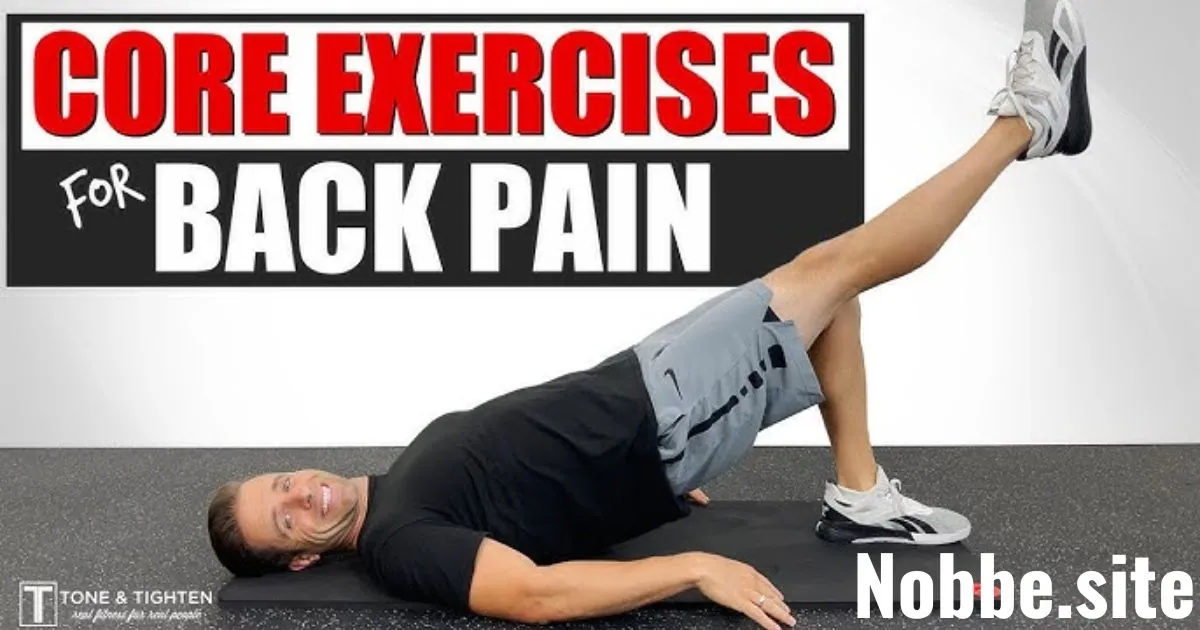
3 Core Exercises That Actually Protect Your Back (And 2 to Avoid)
When your back hurts, traditional core exercises like standard sit-ups and heavy twisting crunches can actually make the problem worse. They place excessive compressive force on your lumbar spine.
Instead, focus on “spinal stiffness” and stability. The following exercises strengthen your core without flexing or stressing your lower back.
1. The Bird-Dog
This exercise targets the deep stabilizers of the spine while teaching your body to move its limbs independently of your torso.
-
How to do it: Start on your hands and knees in a tabletop position. Slowly extend your right arm straight forward and your left leg straight back until both are parallel to the floor. Hold for two seconds, keeping your hips perfectly level, then return to center. Repeat on the opposite side.
-
Repetitions: Aim for 3 sets of 8–10 controlled reps per side.
2. The Modified Deadbug
The Deadbug is fantastic for targeting the transverse abdominis, keeping your lower back safely pressed flat against the floor throughout the entire movement.
-
How to do it: Lie on your back with your arms pointing toward the ceiling and your knees bent at a 90-degree angle (legs in the air). Slowly lower your right arm behind your head while simultaneously extending your left leg straight out, hovering it just above the floor. Return to the starting position and switch sides.
-
Repetitions: Perform 3 sets of 10 alternating reps.
3. The Forearm Plank
The plank is the ultimate isometric (static) core builder, but form is everything.
-
How to do it: Rest on your forearms and toes, keeping your body in a straight line from head to heels. Squeeze your glutes and pull your belly button toward your spine. Do not let your hips sag toward the floor, as this pinches the lower back.
-
Repetitions: Hold for 20 to 45 seconds. Prioritize perfect form over a longer duration.
The Role of Hip Mobility and Glute Strength
A weak core rarely acts alone. It is usually paired with tight hip flexors (from prolonged sitting) and “sleepy” glutes (butt muscles).
When your hip flexors are tight, they pull your pelvis forward. This creates an exaggerated arch in your lower back—a posture known as anterior pelvic tilt. By strengthening your glutes with simple exercises like Glute Bridges and stretching your hip flexors daily, you relieve that forward pull and allow your core to do its job efficiently.
Consistency is Key: Your Daily Action Plan
You do not need to spend hours in the gym to cure lower back pain. In fact, short, daily sessions are far more effective for neuromuscular re-education (teaching your muscles how to fire correctly) than one long workout a week.
The 10-Minute Daily Routine: Spend five minutes stretching your hips and five minutes performing the Bird-Dog, Deadbug, and Plank variations.
Combine this movement routine with intentional posture checks throughout your workday. If you sit for long periods, stand up every 45 minutes to reset your pelvis and decompress your spine.
Conclusion: Take Back Control
Lower back pain can feel incredibly restrictive, but it doesn’t have to be a permanent fixture in your life. By shifting your focus from temporary relief to long-term structural support, you can fix the root cause of the issue. Dedicate a few minutes every day to building a balanced, 360-degree core, and you will give your lower back the stability it needs to remain pain-free for years to come.