Walk into any grocery store, and you are surrounded by mixed messages. One food label proudly boasts “no added sugar,” while a fitness influencer on your feed claims that fruit is nature’s candy and should be avoided. It leaves most of us asking the same question: Is sugar really that bad for you, or have we just found our latest dietary villain?
To find the truth, we have to look past the hype and look at the actual science of how sugar affects our bodies, minds, and habits.
Not All Sugars Are Created Equal
Before we can judge sugar, we need to understand that it wears many masks. Your body doesn’t treat all sweetness the same way. The biggest mistake people make is grouping natural sugars and added sugars into the same category.
1. Natural Sugars (The Good Guys)
Found in fruits (fructose) and dairy products (lactose), these sugars come packaged with essential vitamins, minerals, antioxidants, and—most importantly—fiber. Fiber acts like a speed bump for your metabolism. It slows down digestion, meaning the sugar enters your bloodstream gradually, providing sustained energy rather than a sudden spike.
2. Added Sugars (The Real Culprits)
These are sugars extracted and added to foods during processing to enhance flavor or shelf life. Think high-fructose corn syrup, sucrose, cane sugar, and even “healthy” sounding alternatives like agave nectar or honey when consumed in excess. Because these lack fiber and nutrients, they absorb rapidly, causing a massive spike in blood glucose.
What Happens to Your Body on a Sugar High?
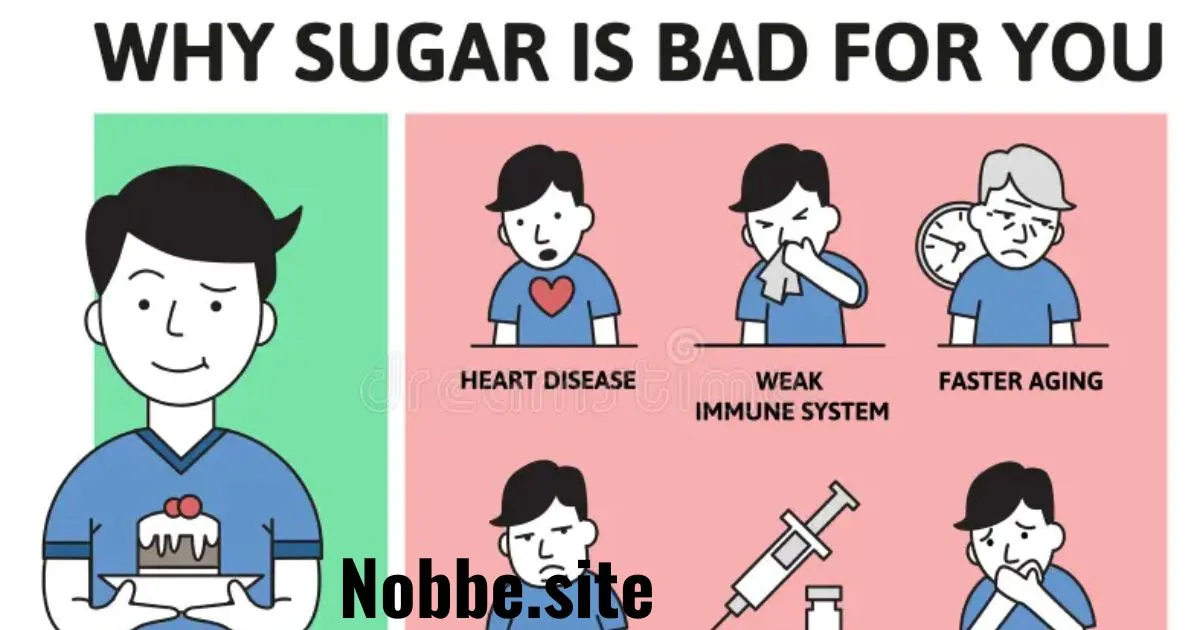
When you consume a high amount of added sugar—say, from a soda or a pastry—your pancreas goes into overdrive, pumping out insulin. Insulin’s job is to clear sugar out of your blood and push it into your cells for energy.
However, when you flood your system, two things happen:
-
The Sugar Crash: Insulin clears the glucose so fast that your blood sugar levels plummet below baseline. This triggers fatigue, irritability, and—ironically—a craving for more sugar to bring your energy back up.
-
Fat Storage: If your muscles and liver are already full of glycogen (stored energy), your liver has no choice but to convert the excess sugar into lipids (fat). Over time, this process can lead to non-alcoholic fatty liver disease, weight gain, and insulin resistance—the primary driver of Type 2 diabetes.
The Million-Dollar Question: Is Sugar Actually Addictive?
Many people claim they are “addicted to sugar,” feeling completely powerless around sweets. But can you actually be addicted to a food?
The science is fascinating. When you eat sugar, it triggers the release of dopamine in the brain’s reward center (the nucleus accumbens). This is the exact same pathway activated by addictive substances like nicotine or alcohol. From an evolutionary standpoint, this made sense: our ancestors needed to seek out calorie-dense foods to survive, so the brain rewarded them for finding sweet, safe-to-eat fruits.
However, modern neuroscientists debate whether this qualifies as a literal “addiction.”
The Expert Consensus: While sugar activates reward pathways, it doesn’t alter brain chemistry to the extreme degree that drugs do. Most experts describe it as a highly rewarding behavior or a psychological dependency rather than a classic chemical addiction. You aren’t necessarily addicted to the molecule of sugar itself; you are hooked on the hyper-palatable combination of sugar, fat, and salt that modern processed foods provide.
How Much Sugar is Too Much?
You don’t need to cut out sugar entirely to be healthy. The human body runs on glucose; it is the primary fuel for your brain. The key is moderation.
The American Heart Association (AHA) recommends strict limits on added sugars:
| Group | Daily Limit (Grams) | Daily Limit (Teaspoons) | Equivalent Example |
| Women | 25 grams | ~6 teaspoons | 1 small chocolate chip cookie |
| Men | 36 grams | ~9 teaspoons | Less than one 12 oz can of regular soda |
To put this in perspective, a single can of regular soda can contain up to 40 grams of added sugar—shattering your daily limit in just a few sips.
Practical Ways to Break the Sugar Cycle
If you feel trapped in a cycle of constant cravings and crashes, you don’t have to quit cold turkey. Simple, sustainable shifts can retrain your palate and stabilize your energy.
-
Read the Hidden Labels: Sugar hides under names like maltodextrin, barley malt, dextrose, and evaporated cane juice. Check the “Added Sugars” line on the nutrition facts panel.
-
Focus on the Trio (Protein, Fat, Fiber): Whenever you eat carbohydrates, pair them with a healthy fat or protein (like an apple with peanut butter). This slows down glucose absorption and keeps you full.
-
Hydrate First: The brain often confuses dehydration with food cravings. The next time a sugar craving hits, drink a large glass of water and wait 15 minutes.
The Final Verdict
Is sugar inherently toxic? No. Your body knows exactly how to handle natural sugars in moderation.
The real danger lies in the invisible, heavily processed added sugars that flood modern diets. By cutting back on sugary drinks and ultra-processed snacks while embracing whole foods, you can enjoy sweetness without letting it control your health.