Losing weight is often associated with obsessive math. We are told to log every bite, scan every barcode, and live our lives trapped in a spreadsheet of macronutrients. For many, this hyper-focus on numbers leads to burnout, anxiety, and an unsustainable relationship with food.
The good news? You do not need to track every single calorie to shed pounds safely and permanently. By shifting your focus from restricting numbers to improving food quality and habits, you can achieve your fitness goals while maintaining your peace of mind.
Here is a science-backed guide to losing weight safely without the stress of constant tracking.
1. Prioritize Whole, Nutrient-Dense Foods
When you stop counting calories, you must start making calories count. The easiest way to create a natural calorie deficit without tracking is to base your diet on whole foods.
Whole foods—like vegetables, fruits, lean proteins, whole grains, and healthy fats—are naturally high in volume and nutrients but lower in energy density. This means you can eat a larger, more satisfying volume of food for fewer total calories.
-
Load up on fiber: Vegetables and legumes slow down digestion, keeping you full for hours.
-
Swap refined for whole: Replace white bread and sugary cereals with oats, quinoa, and brown rice, which prevent the blood sugar spikes that trigger intense cravings.
2. Make Protein the Centerpiece of Every Meal
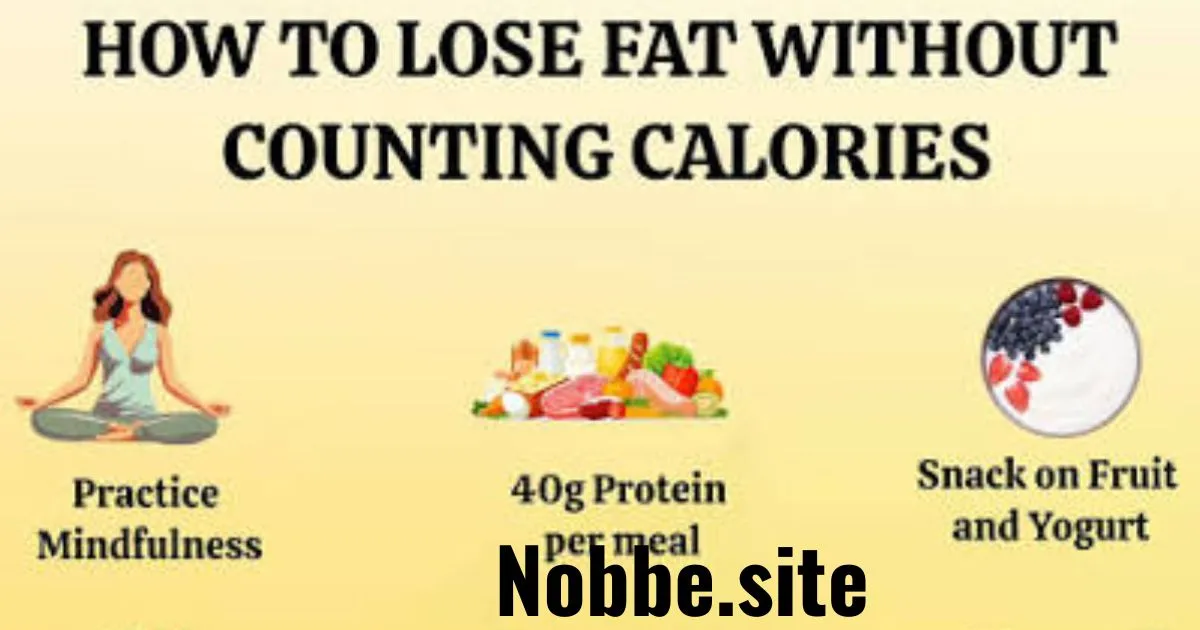
If there is one macronutrient to prioritize for effortless weight loss, it is protein. Protein is the most satiating nutrient, meaning it suppresses hunger hormones far better than carbohydrates or fats.
Additionally, protein has a higher thermic effect of food (TEF) than other nutrients. This means your body burns more energy simply digesting and processing protein than it does processing fats or carbs.
-
Excellent sources: Chicken breast, turkey, fish, eggs, Greek yogurt, tofu, and lentils.
-
The Strategy: Aim for a palm-sized portion of protein at every major meal to keep mid-day snacking at bay.
3. Master the “Plate Method” for Visual Portion Control
You do not need digital scales to practice portion control. The visual “Plate Method” is a highly effective, stress-free alternative used by dietitians worldwide to balance macronutrients automatically.
| Plate Section | Food Type | Why It Works |
| One-Half (50%) | Non-starchy vegetables (spinach, broccoli, peppers, cucumbers) | Adds massive volume, water, and fiber with almost zero caloric impact. |
| One-Quarter (25%) | Lean protein | Retains muscle mass and keeps you feeling full. |
| One-Quarter (25%) | Complex carbohydrates or starchy veggies (sweet potatoes, oats, rice) | Provides sustained energy for your daily activities and workouts. |
Pro Tip: Treat healthy fats (like olive oil, avocado, or nuts) as a garnish or dressing. They are incredibly healthy but highly concentrated in energy, so a thumb-sized portion per meal is usually plenty.
4. Practice Mindful and Attentive Eating
In our fast-paced world, we frequently eat while scrolling through social media or watching television. Distracted eating blunts the brain’s ability to recognize fullness signals, often leading to overeating without realizing it.
Your body has built-in hunger hormones, specifically leptin (the fullness hormone) and ghrelin (the hunger hormone). To let them do their job, try these mindful eating habits:
-
Chew thoroughly and slow down: It takes roughly 20 minutes for your stomach to signal to your brain that it is full.
-
Eliminate distractions: Put away phones and laptops during mealtime.
-
Use the hunger scale: Before reaching for a snack, ask yourself if you are genuinely, physically hungry, or if you are simply bored, stressed, or dehydrated.
5. Rethink Your Drinks
One of the biggest culprits of hidden weight gain is liquid calories. Specialty coffees, sodas, sweetened teas, and fruit juices contribute hundreds of calories a day without triggering any of the fullness signals that solid food provides.
Switching almost exclusively to water, herbal teas, or black coffee is the ultimate “free pass” to cutting calories effortlessly. Staying well-hydrated also prevents misinterpreting thirst as hunger.
6. Focus on Non-Scale Victories (NSVs)
When you aren’t obsessed with tracking numbers on an app, you shouldn’t be completely obsessed with the numbers on the scale either. True, sustainable weight loss affects your entire well-being. Look out for these signs of progress:
-
Your energy levels are stable throughout the day.
-
Your clothes fit more comfortably.
-
Your sleep quality improves.
-
You feel stronger during physical activity.
Conclusion: Consistency Over Perfection
Losing weight safely without counting calories relies on building sustainable habits. It is not about a temporary diet; it is about creating a lifestyle change you can maintain for years. By focusing on whole foods, visual portion control, mindful eating, and adequate protein, you naturally guide your body toward a healthier weight—no spreadsheets required.