In today’s fast-paced, always-connected world, it is easier than ever to feel completely overwhelmed. Between demanding work schedules, family obligations, social circles, and the endless stream of digital notifications, many people find themselves running on empty. If you constantly feel drained, resentful, or anxious, it is highly likely that your emotional boundaries are compromised.
Learning how to set boundaries is not a selfish act; it is the cornerstone of protecting your emotional health, preventing burnout, and cultivating healthy, respectful relationships. When you set clear limits, you decide what you let into your life and what you keep out.
What Are Boundaries (And Why Do They Matter)?
Emotional boundaries are the imaginary lines we draw around ourselves to protect our personal space, mental energy, and well-being. They define where you end and where another person begins.
Many people mistakenly believe that setting boundaries means building a wall to shut people out. In reality, boundaries are more like a gate with a lock. They allow you to let in supportive, healthy interactions while keeping out toxic, draining behavior.
Without firm limits, you are highly susceptible to:
-
Emotional Exhaustion: Giving away all your energy until you have nothing left for yourself.
-
Resentment: Feeling bitter toward friends, family, or colleagues because you feel taken advantage of.
-
Loss of Identity: Constantly prioritizing other people’s needs, opinions, and desires over your own.
The Different Types of Boundaries You Need
To experience true emotional balance, you need to establish healthy limits across several areas of your life.
| Boundary Type | What It Protects | Examples of Healthy Limits |
| Emotional Boundaries | Your feelings and internal energy. | Not absorbing other people’s negative moods; choosing not to share personal details with untrustworthy people. |
| Time & Energy Boundaries | How you spend your hours and effort. | Turning off work notifications after 6:00 PM; saying no to weekend plans when you are exhausted. |
| Material Boundaries | Your physical possessions and finances. | Setting rules on who can borrow your car or money, and expecting them to be returned in good condition. |
| Mental Boundaries | Your thoughts, values, and core beliefs. | Respecting your own opinions even when others disagree; refusing to tolerate verbal disrespect. |
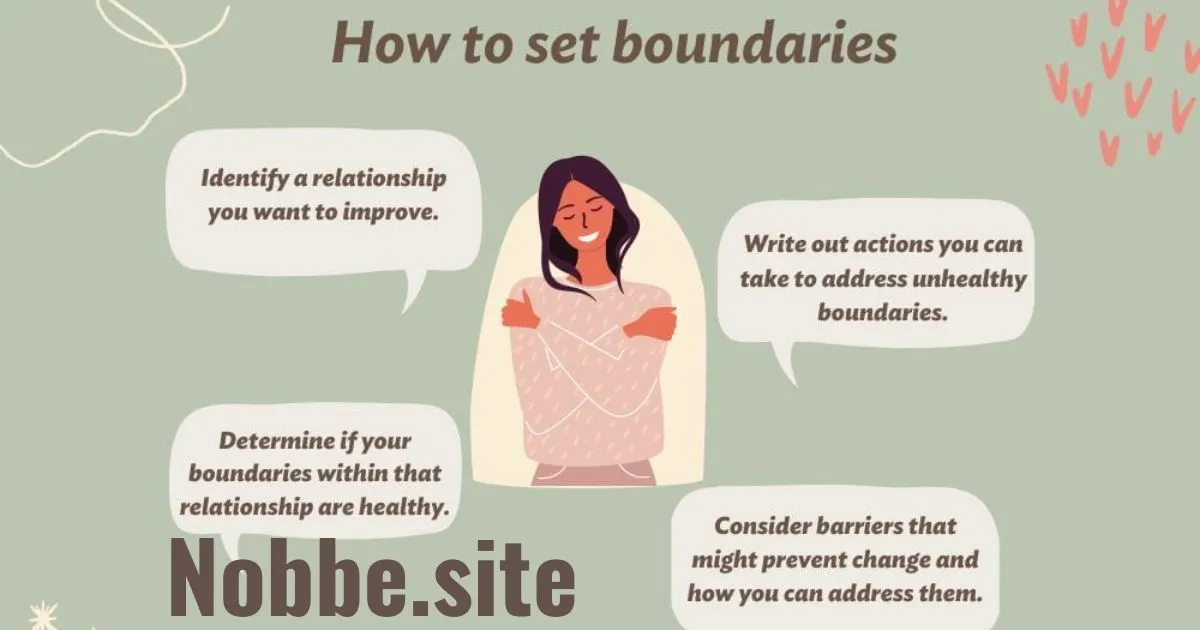
Step-by-Step: How to Set Boundaries Effectively
Setting boundaries is a skill that requires practice. If you are a natural people-pleaser, the process can feel uncomfortable at first. However, following these clear steps will help you communicate your limits with confidence and grace.
Script Templates: What to Say in Real Life
Sometimes, the hardest part of setting limits is finding the right words. Here are a few simple scripts you can adapt for different situations:
At Work: “I want to give this project my full attention, but my schedule is currently full. If this is a high priority, which of my current tasks should I deprioritize to make room for it?”
With Family/Friends: “I love spending time with you, but I cannot talk about [sensitive topic] anymore. If the conversation goes back to that, I am going to have to leave/hang up the phone.”
Saying a Simple ‘No’: “Thank you so much for thinking of me, but I don’t have the capacity to help out with that right now.”
Overcoming the Guilt of Saying ‘No’
The absolute biggest hurdle people face when learning how to set boundaries is guilt. You might worry that you are hurting someone’s feelings, being mean, or letting people down.
When you start asserting yourself, remember this crucial truth: You are only responsible for communicating your boundary respectfully; you are not responsible for how the other person reacts to it.
If someone gets angry or upset when you set a boundary, it usually means they were benefiting from your lack of boundaries. Their negative reaction is confirmation that the limit was desperately needed in the first place.
Over time, setting limits will actually improve your relationships. It eliminates hidden resentment, builds mutual respect, and ensures that when you do say “yes” to someone, it comes from a place of genuine willingness rather than obligation.
Conclusion: Protect Your Peace
Setting boundaries for better emotional health is an ongoing journey, not a one-time event. It requires constant self-awareness and the courage to honor your own needs.
Start small. Practice saying no to minor requests that drain your energy, and gradually work your way up to larger, more impactful boundaries. By valuing your own time, mind, and emotional space, you create a life that is peaceful, balanced, and sustainable.